Turn a policy into overview, flashcards, a quiz, and a certificate.
Each policy can include training generated from its content: a short overview, flashcards, and a quiz. Passing can issue a certificate. Assignment and refresh cadence live on the board and acknowledgment campaign.
Make key policy points easier to absorb
Check understanding with a quiz before people move on
Record completion and certificates for later review
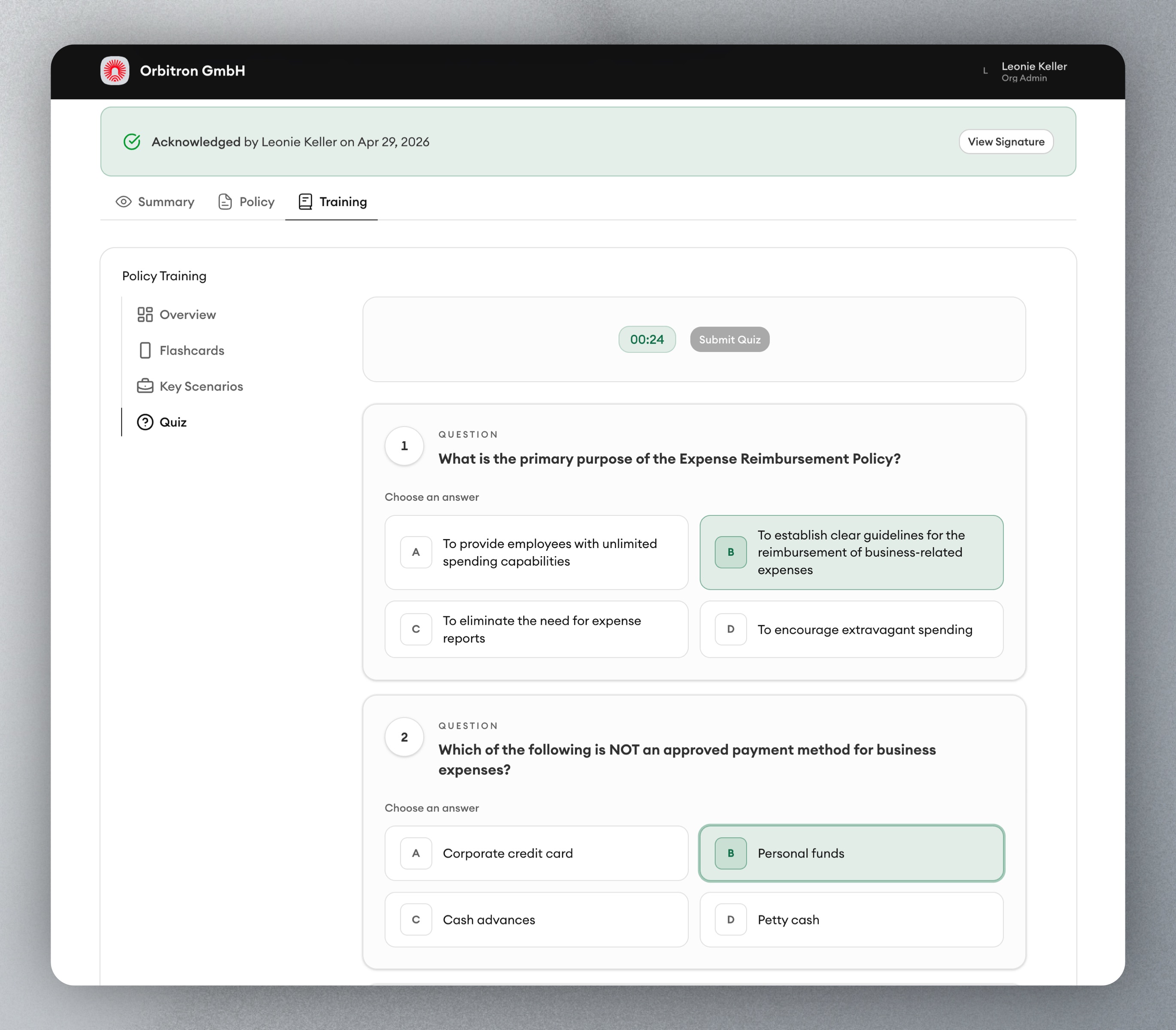
Sending documents is not the same as teaching them.
Low retention
Employees skim long documents, acknowledge them quickly, and forget what mattered.
No signal on comprehension
Leaders know a file was opened or signed, but not whether it was understood.
Follow-up stays manual
Training gaps often surface late because teams rely on spreadsheets and reminders.
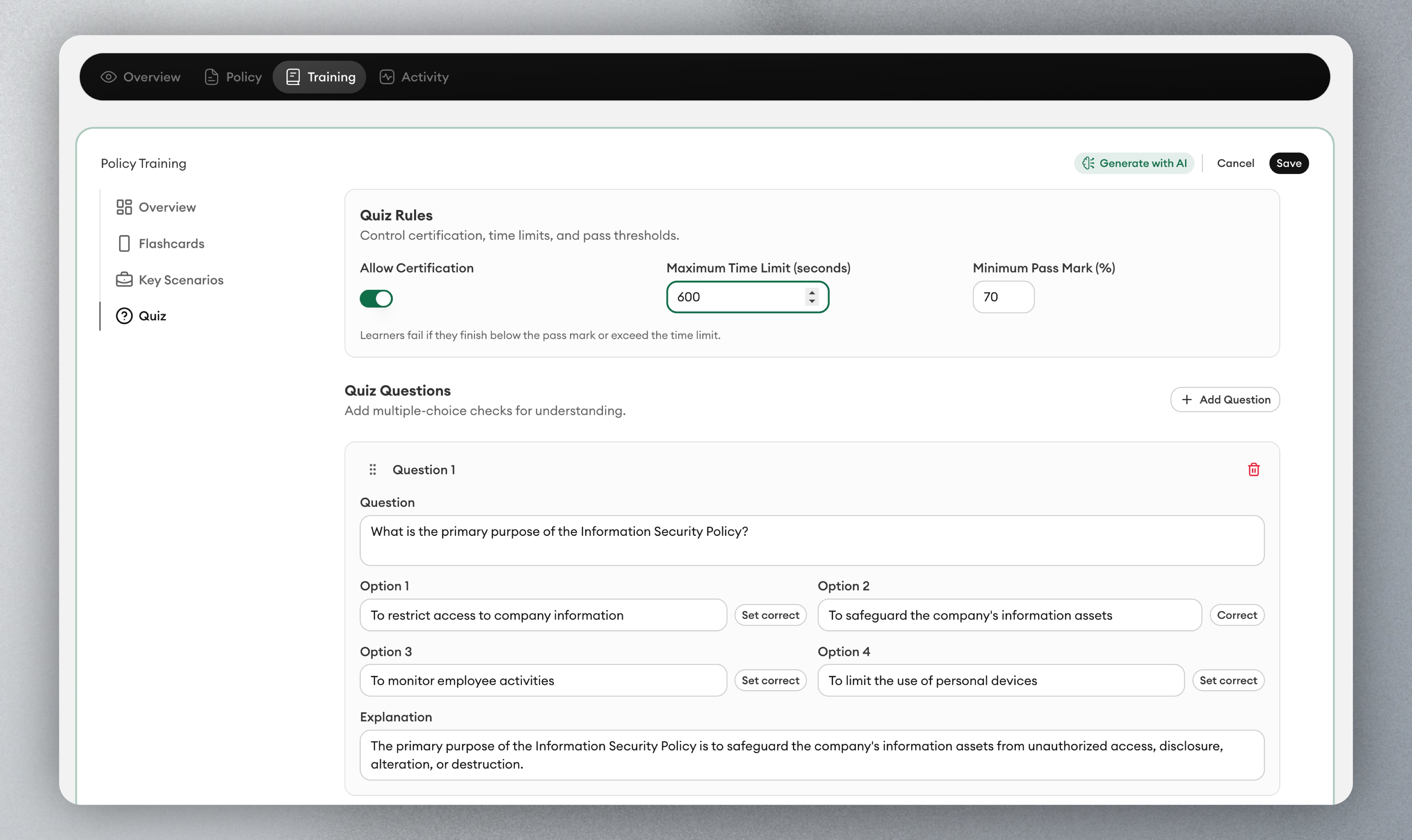
Attach training to the policy, not a separate LMS project.
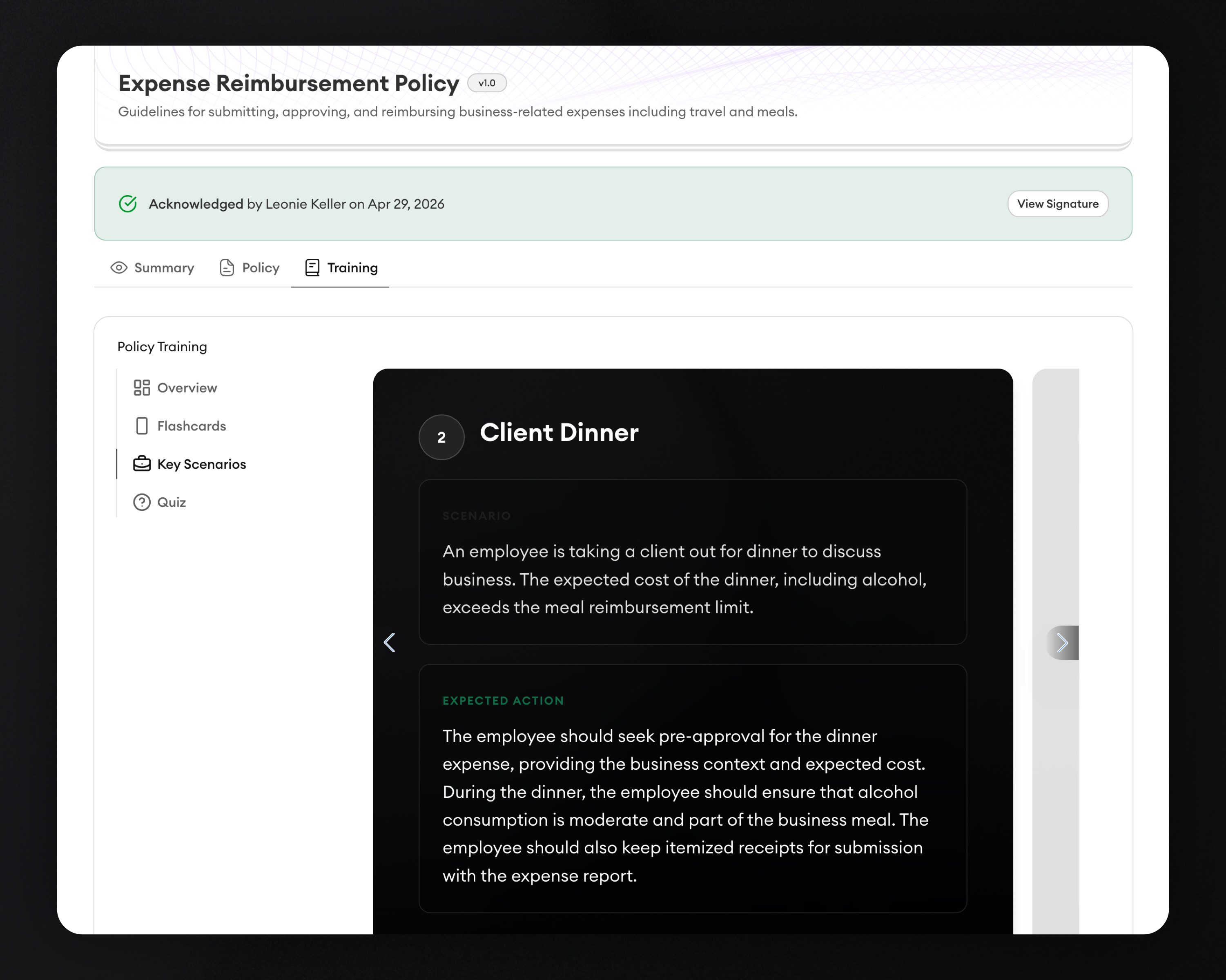
Generate from the source policy
Create an overview, flashcards, and a quiz from the policy content instead of building a course from scratch.
Quiz and certificate
Employees study, take the quiz, and can receive a certificate when you enable it. Scores and pass or fail stay on the training record.
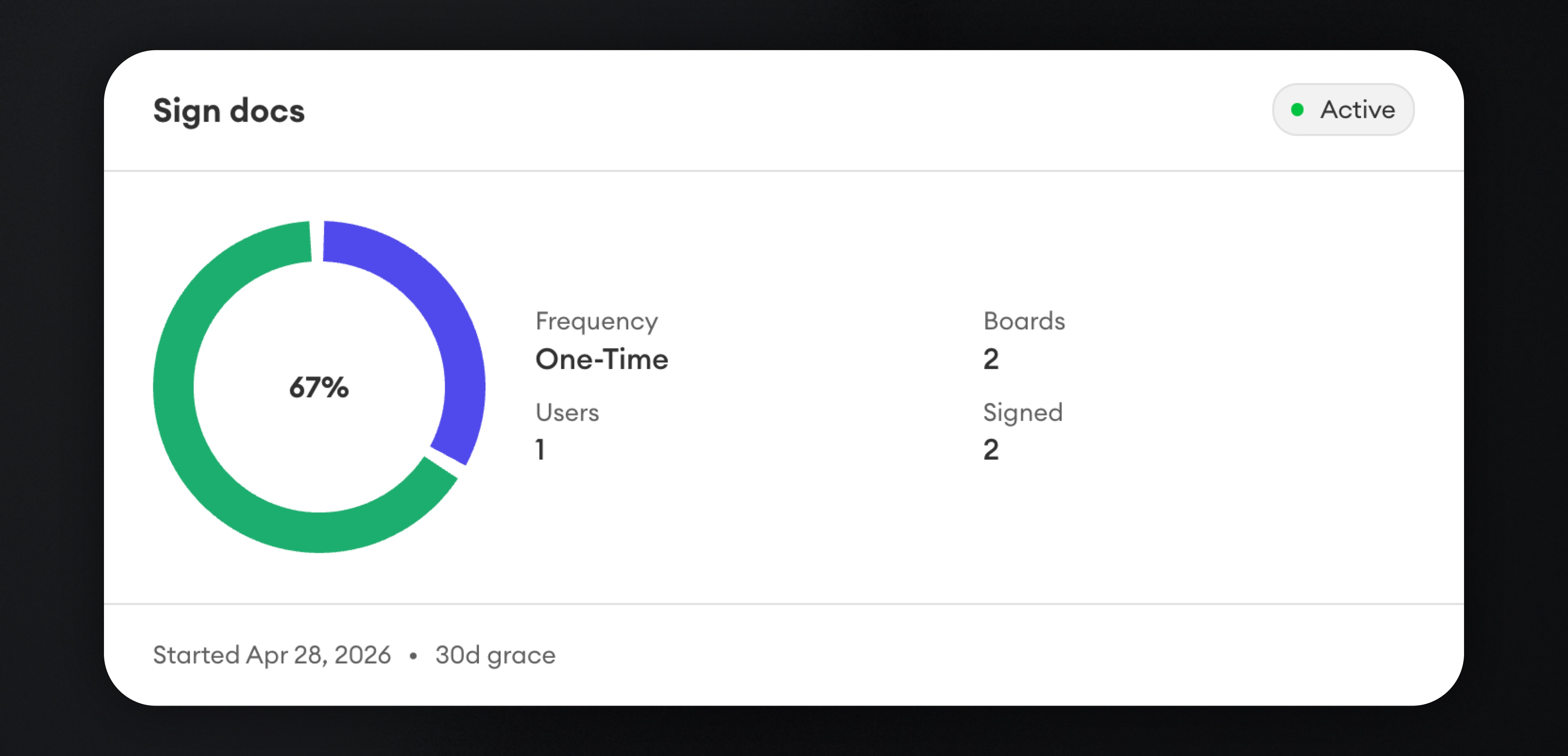
See completion in analytics
Track start and completion rates alongside portal views and acknowledgments. Recurring reminders belong on acknowledgment campaigns, not a separate training cadence engine.
For teams that want proof of understanding, not just attendance.
Employee onboarding and policy refresh cycles
A practical use case where this workflow gives teams cleaner ownership and proof.
Higher-risk teams that need a quiz signal
A practical use case where this workflow gives teams cleaner ownership and proof.
Operators replacing spreadsheets and manual follow-up
A practical use case where this workflow gives teams cleaner ownership and proof.
Get started in three practical steps.
01
Bring the workflow in
Start with your current policies, templates, owners, or approval process.
02
Configure the rollout
Define who needs to review, learn, acknowledge, or act on each update.
03
Track proof over time
Keep versions, training, acknowledgments, and evidence connected in one place.
EU Data Sovereignty, built in.
EU-hosting
All databases and servers stay in Germany only. AI processing uses an EU-frontier LLM.
GDPR compliant
Support clear records for policies, training, and acknowledgments.
Made in Germany
Built in Europe for teams that care about control and trust.
FAQs
Common questions about this workflow.
Can DocsOrb work with our existing policies?
Yes. DocsOrb is designed to help teams organize existing documents, improve ownership, and connect rollout activity around them.
Do we need a compliance team to use it?
No. It is useful for founders, HR, legal, operations, and security teams that need structured policy workflows without heavyweight tooling.
How does this connect to training and acknowledgments?
Policy content can feed into employee learning, comprehension checks, acknowledgment tracking, and evidence records.
Ihre Privatsphäre ist uns wichtig
Wir verwenden Cookies, um DocsOrb sicher zu halten, die Nutzung der Website zu verstehen und Ihr Erlebnis zu verbessern. Sie können alle akzeptieren, optionale Cookies ablehnen oder Ihre Einstellungen verwalten. Datenschutzerklärung lesen