Policy boards with a review path your team can actually run.
Organise policies into branded boards, move them from draft to approved, import existing files from Google Drive or SharePoint, and publish versioned content employees can find.
Boards as the source of truth for related policies
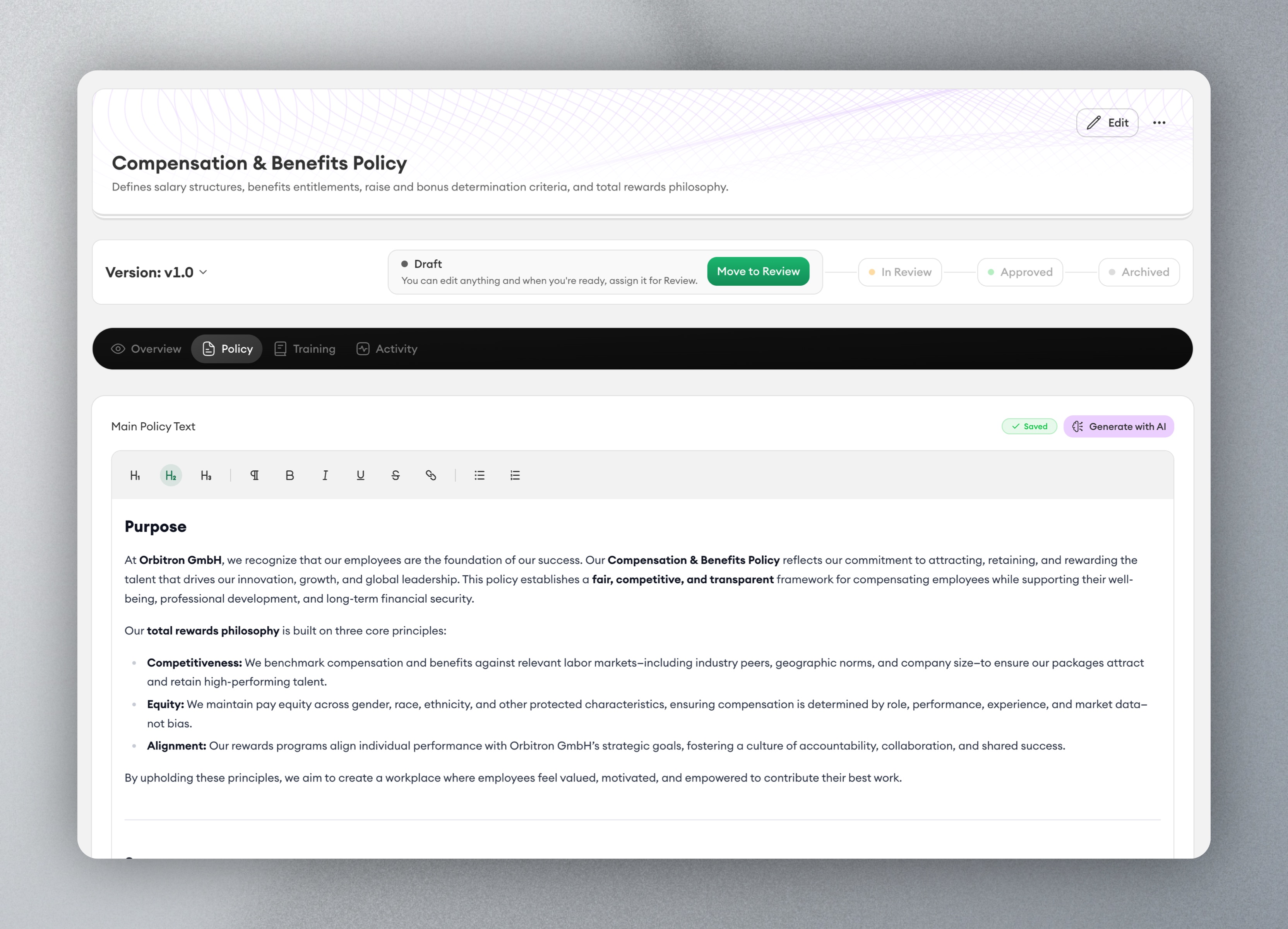
Draft, in review, and approved before employees see them
Import from Google Drive or SharePoint, or write in DocsOrb
Policies break down when the process lives everywhere.
Scattered ownership
Legal, HR, security, and operations each hold part of the process, so nobody has a clean view of what is current.
Unclear approval state
Teams lose time chasing comments, sign-off, and version history across email, docs, and chat.
Weak proof
When someone asks what was published and when, the answer is often manual and incomplete.
Run policy work as boards, versions, and a publish step.
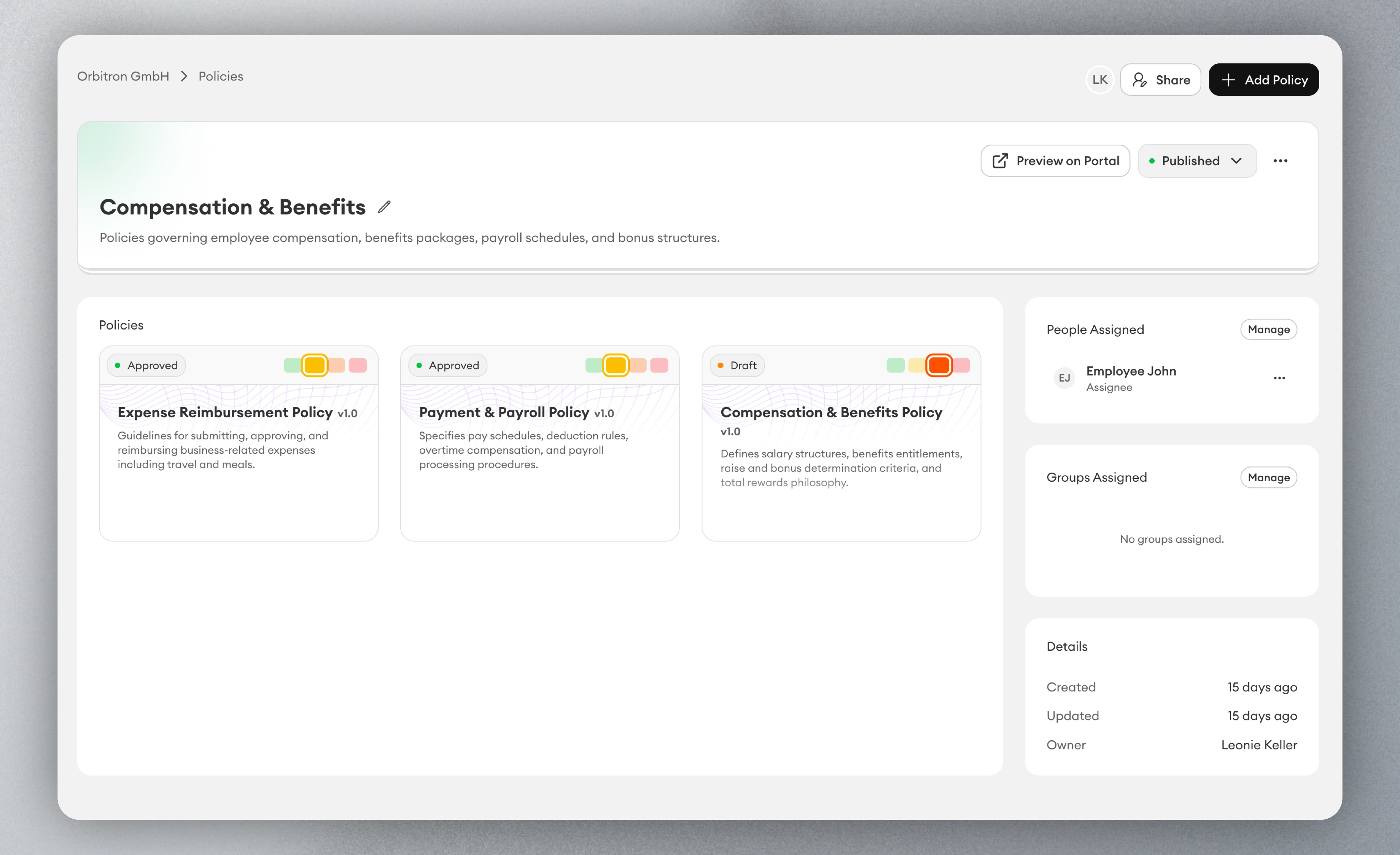
Organise by board
Group related policies into branded boards such as onboarding, security, or HR. Employees only see published boards assigned to them.
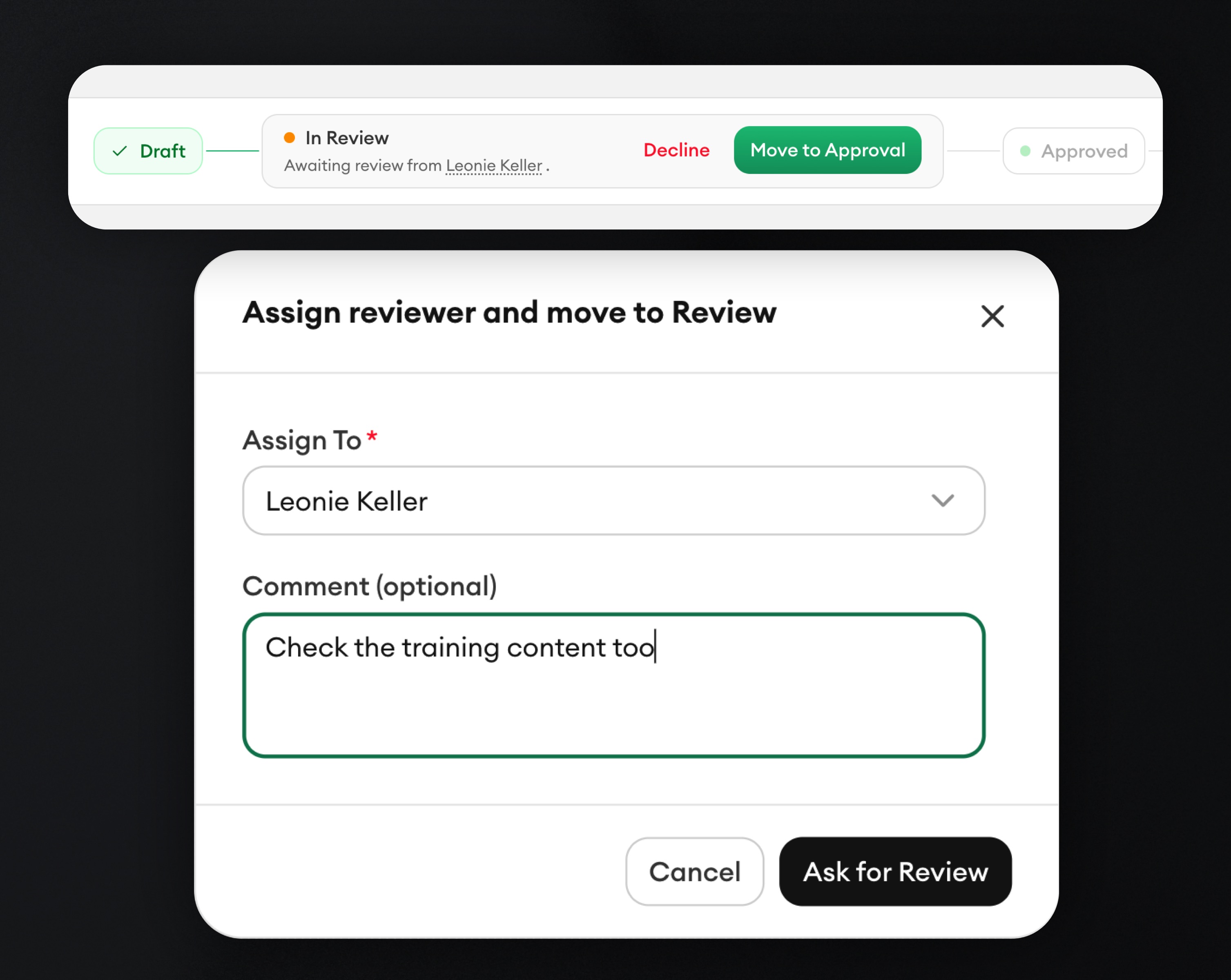
Review, then approve
Policies move through Draft, In Review, and Approved. Review and approve permissions stay separate from drafting.
Keep files where they already live
Write in the DocsOrb editor, upload a file, or link a Google Drive or SharePoint document without copying it out of the source system.
For teams that need more than a shared drive.
Teams rolling policies across multiple functions or locations
A practical use case where this workflow gives teams cleaner ownership and proof.
Operators who need clarity on current versions and owners
A practical use case where this workflow gives teams cleaner ownership and proof.
Companies preparing for customer, legal, or audit scrutiny
A practical use case where this workflow gives teams cleaner ownership and proof.
Get started in three practical steps.
01
Bring the workflow in
Start with your current policies, templates, owners, or approval process.
02
Configure the rollout
Define who needs to review, learn, acknowledge, or act on each update.
03
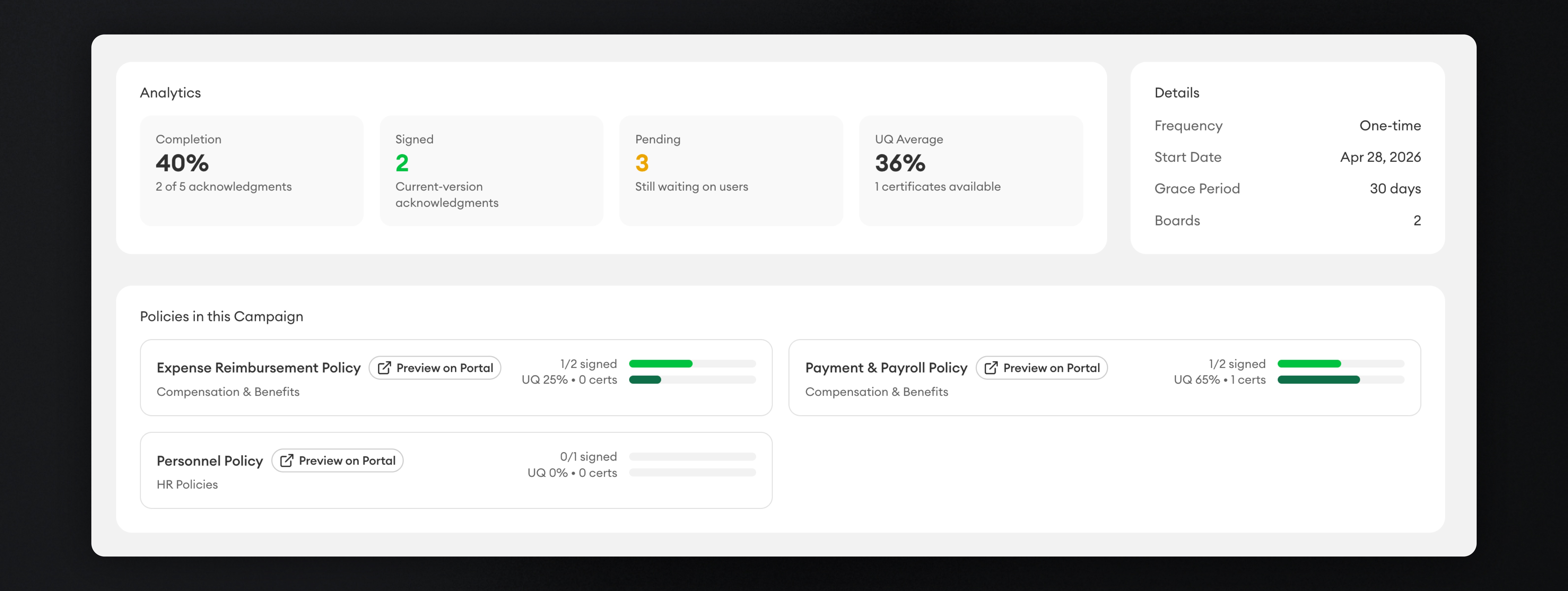
Track proof over time
Keep versions, training, acknowledgments, and evidence connected in one place.
EU Data Sovereignty, built in.
EU-hosting
All databases and servers stay in Germany only. AI processing uses an EU-frontier LLM.
GDPR compliant
Support clear records for policies, training, and acknowledgments.
Made in Germany
Built in Europe for teams that care about control and trust.
FAQs
Common questions about this workflow.
Can DocsOrb work with our existing policies?
Yes. DocsOrb is designed to help teams organize existing documents, improve ownership, and connect rollout activity around them.
Do we need a compliance team to use it?
No. It is useful for founders, HR, legal, operations, and security teams that need structured policy workflows without heavyweight tooling.
How does this connect to training and acknowledgments?
Policy content can feed into employee learning, comprehension checks, acknowledgment tracking, and evidence records.
We value your privacy
We use cookies to keep DocsOrb secure, understand how the site is used, and improve your experience. You can accept all, reject optional cookies, or manage your preferences. Read our Privacy Policy