Turn your AI policy into guardrails that run where AI is used.
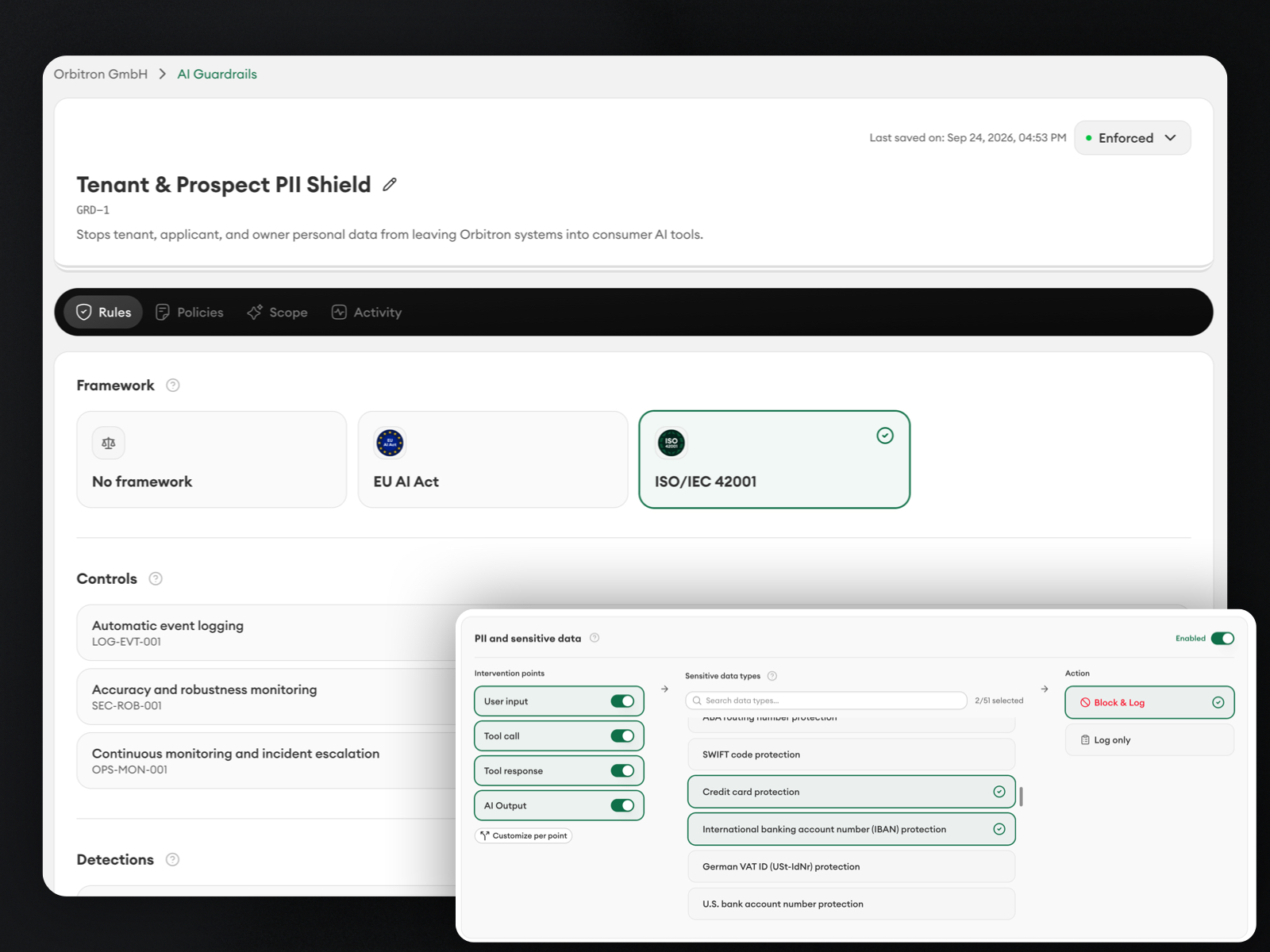
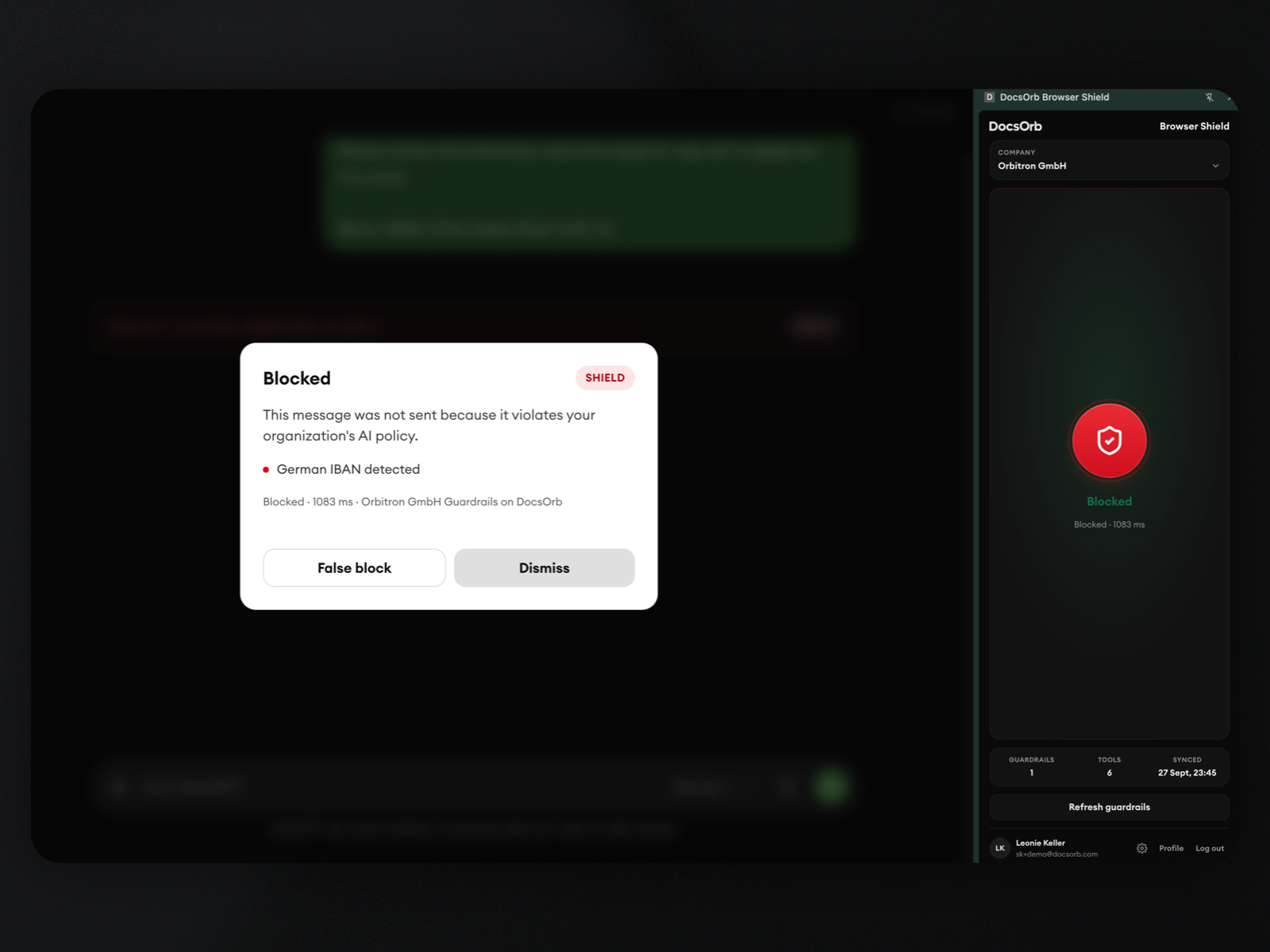
Define guardrails once, link them to policies and frameworks, and enforce them in the browser with Browser Shield, in AI assistants over MCP, and in your own apps with the SDK or REST API.
What users type before it reaches the model
Tool calls and tool responses in agent workflows
What the model sends back
AI is already in daily work. A PDF does not govern it.
Policy and tools are disconnected
The usage policy says what is allowed, but nothing connects those rules to the sites and assistants people actually use.
Data leaves before anyone notices
Customer data, personal data, and secrets get pasted into prompts long before a quarterly review.
No enforcement evidence
When a customer or auditor asks how the AI policy is enforced, a screenshot of a document is not an answer.
One set of guardrails, enforced on every surface.
Start from a preset
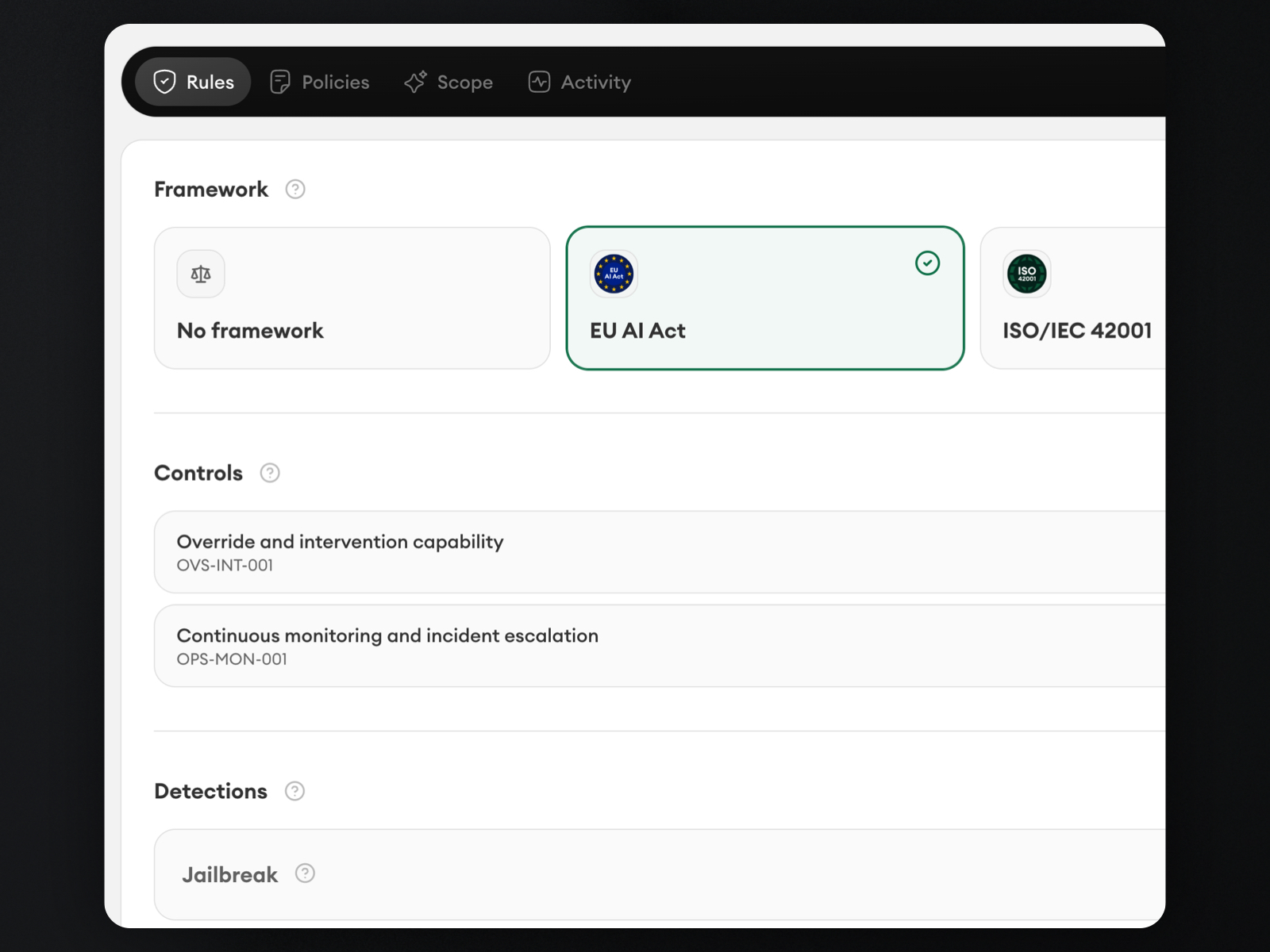
Begin with DocsOrb Baseline, EU AI Act, or ISO 42001 presets, then link each guardrail to the policies, tools, and frameworks it enforces.
Browser, MCP, SDK, and API
Browser Shield enforces rules on AI websites. The DocsOrb MCP server covers Cursor, Claude, VS Code, and other assistants. The SDK and REST API cover your own apps.
AI Analytics for the trail
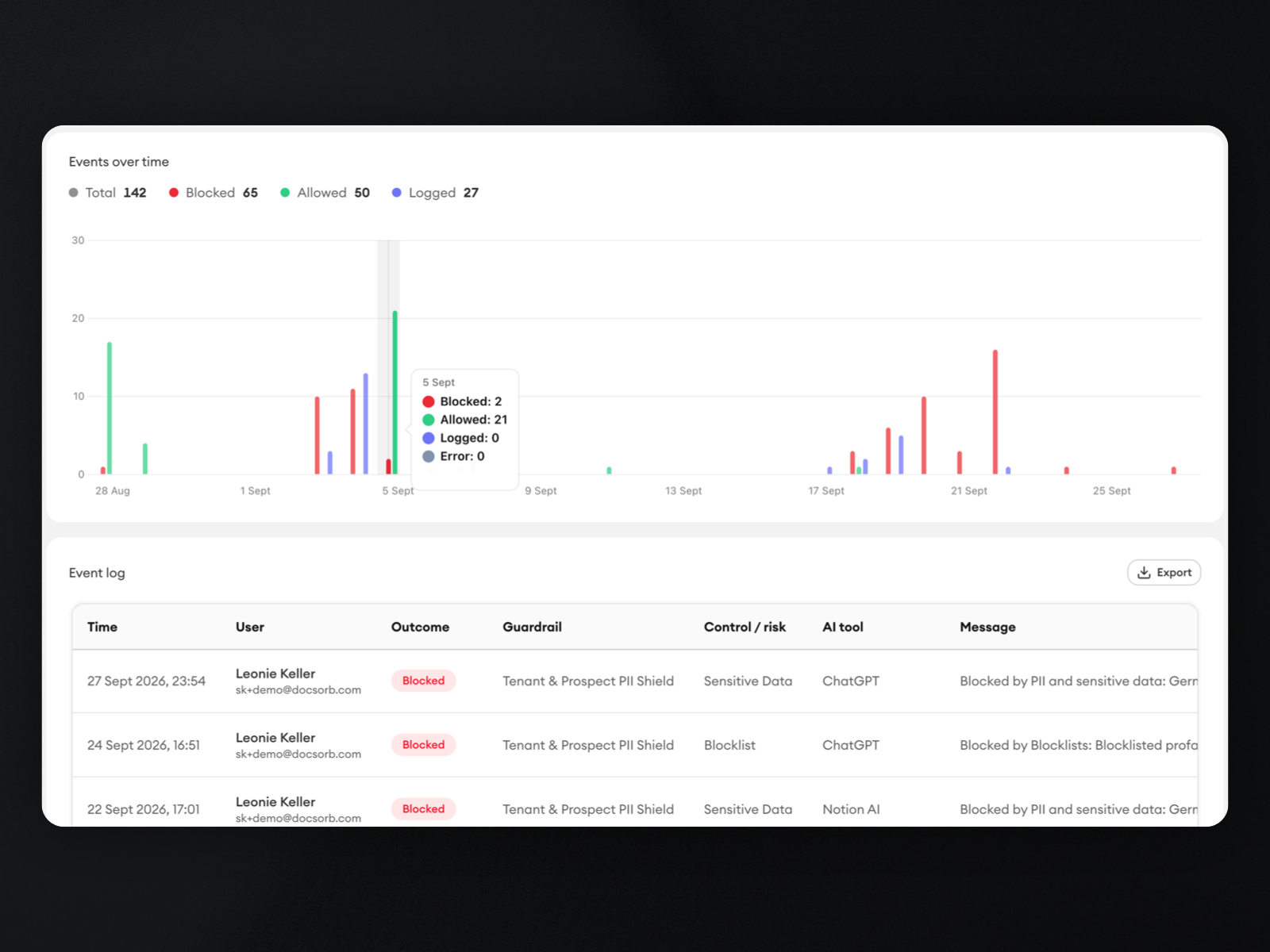
Every evaluation is logged by outcome, guardrail, user, tool, and risk type, and exports as CSV.
Especially relevant once AI use becomes normal work.
Teams handling customer, legal, financial, or regulated data
A practical use case where this workflow gives teams cleaner ownership and proof.
Companies that need enforcement evidence, not just a policy
A practical use case where this workflow gives teams cleaner ownership and proof.
Engineering teams shipping AI features and agents
A practical use case where this workflow gives teams cleaner ownership and proof.
Get started in three practical steps.
01
Bring the workflow in
Start with your current policies, templates, owners, or approval process.
02
Configure the rollout
Define who needs to review, learn, acknowledge, or act on each update.
03
Track proof over time
Keep versions, training, acknowledgments, and evidence connected in one place.
EU Data Sovereignty, built in.
EU-hosting
All databases and servers stay in Germany only. AI processing uses an EU-frontier LLM.
GDPR compliant
Support clear records for policies, training, and acknowledgments.
Made in Germany
Built in Europe for teams that care about control and trust.
FAQs
Common questions about this workflow.
Can DocsOrb work with our existing policies?
Yes. DocsOrb is designed to help teams organize existing documents, improve ownership, and connect rollout activity around them.
Do we need a compliance team to use it?
No. It is useful for founders, HR, legal, operations, and security teams that need structured policy workflows without heavyweight tooling.
How does this connect to training and acknowledgments?
Policy content can feed into employee learning, comprehension checks, acknowledgment tracking, and evidence records.
Other features in DocsOrb
Policy Management
Boards, versions, and publish.
Employee Portal
Assigned boards and Allowed AI.
Training
Flashcards, quizzes, certificates.
Acknowledgments
Version-locked campaign sign-off.
AI Inventory
Radar, use cases, risk, and owners.
Developers
SDK, REST API, and MCP server.
Regulations
EU AI Act and ISO 42001 controls.
We value your privacy
We use cookies to keep DocsOrb secure, understand how the site is used, and improve your experience. You can accept all, reject optional cookies, or manage your preferences. Read our Privacy Policy